If you work in healthcare or life sciences, your localization stack lives under the same microscope as your clinical and regulatory content.
In translation, GxP validation means your workflows run in a controlled, documented, and tested environment, with defined roles, locked-down steps, and an audit trail for every change that touches patient, clinical, or device-facing text.
Keep reading for a clear comparison of the five best healthcare localization tools that can support this level of scrutiny, starting with Lokalise.
We’ll look at how top five medical software localization tools handle data governance, ISO 27001–aligned security, and audit-ready logs so you can quickly see which stack keeps your multilingual healthcare content both usable and compliant. Our advice is that, once you narrow down your choices, you make sure to test drive these tools or talk to their sales people for any clarifications.
1. Lokalise: the best healthcare localization tool for governed, audit-ready workflows
Lokalise is the most secure localization tool for healthcare. It’s perfect for teams that need traceable translation workflows across medical software, patient apps, and device documentation.
It’s used by highly regulated industries already, and pairs enterprise-grade security (SOC 2 Type II, ISO 27001/27017, encryption in transit and at rest) with tight control over access, workflows, and audit logs for the enterprise plan.
For GxP-aligned translation, Lokalise gives you a clearly defined, repeatable workflow. Roles and approvals are explicit, each change to clinical or device-facing content is logged, and you can trace strings across environments when auditors ask for evidence.
Who is Lokalise for
Lokalise is the best localization platform for healthcare and life sciences teams that need governed, audit-ready localization for:
Patient and clinical apps (telehealth, remote monitoring, e-prescription tools)
Patient portals and onboarding flows
Medical device UIs and instructions for use (IFUs)
Help centers and knowledge bases for patients and clinicians
With AWS backing Lokalise, I had complete confidence in their reliability and performance. As the technical lead, it was critical for me to choose a localization platform that could meet our enterprise-grade expectations, ensuring our members always have seamless access to the care they need. Lokalise has exceeded those expectations.
Nate Powers, Software Engineer at Maven Clinic.
Why choose Lokalise for medical software localization
There are three main reasons why Lokalise is a great localization platform for healthcare:
Security, compliance, and data governance
Healthcare-ready workflows and integrations
Reliable AI translation capabilities for regulated content
With Lokalise, you get enterprise security posture. This includes SOC 2 Type II and ISO 27001/27017 certifications, plus encryption in transit and at rest, aligned with GDPR and healthcare-grade security expectations.
Additionally, role-based access and scoping help you ensure only the right people and vendors can access PHI-adjacent or safety-critical strings. With full audit trails, you get access to version history, status changes, and activity logs per string, which support GxP validation requirements.
Here’s what to expect in terms of healthcare-ready workflows:
Dedicated workflows for regulated content: Separate steps for translators, in-country medical reviewers, and legal or regulatory sign-off.
Status-based quality gates: Customizable statuses (draft, translated, reviewed, verified) to lock content before it reaches production.
Deep integrations with design and dev tools: Figma, Git, CI/CD, and CMS integrations keep app and documentation copy in sync without manual copy-paste, reducing operational risk.
This makes Lokalise a practical “system of record” for multilingual healthcare content that has to stay in sync across apps, portals, and PDFs.
🧠 Did you know?
For healthcare and life sciences ISO 27001 certification is extremely important. In localization, it means the platform enforces risk-based policies for who can see what, how data is stored, and how changes are logged across projects and environments.
Many of those controls overlap with HIPAA’s Security Rule, giving teams that handle clinical, regulatory, or medical device content a head start on compliance, even when PHI is kept outside the TMS.
Pricing
Lokalise has a Free plan and a 14-day free trial available. Paid plans start from $144/month, paid annually.
Lokalise uses a usage-based model (capacity over seats), with a free plan and paid tiers that add more automation, governance, and analytics. Standard AI translations are included on paid plans, while Enterprise tiers are designed for regulated workloads that need:
Custom security and compliance commitments
More complex approval workflows and audit needs
Higher translation volumes across multiple products and markets
In practice, this means smaller digital health teams can start quickly on lower tiers, while hospitals, large health systems, and life sciences organizations typically run on Enterprise, where they can align Lokalise with their security, legal, and validation requirements.
2. Smartling: Healthcare translation with bundled services
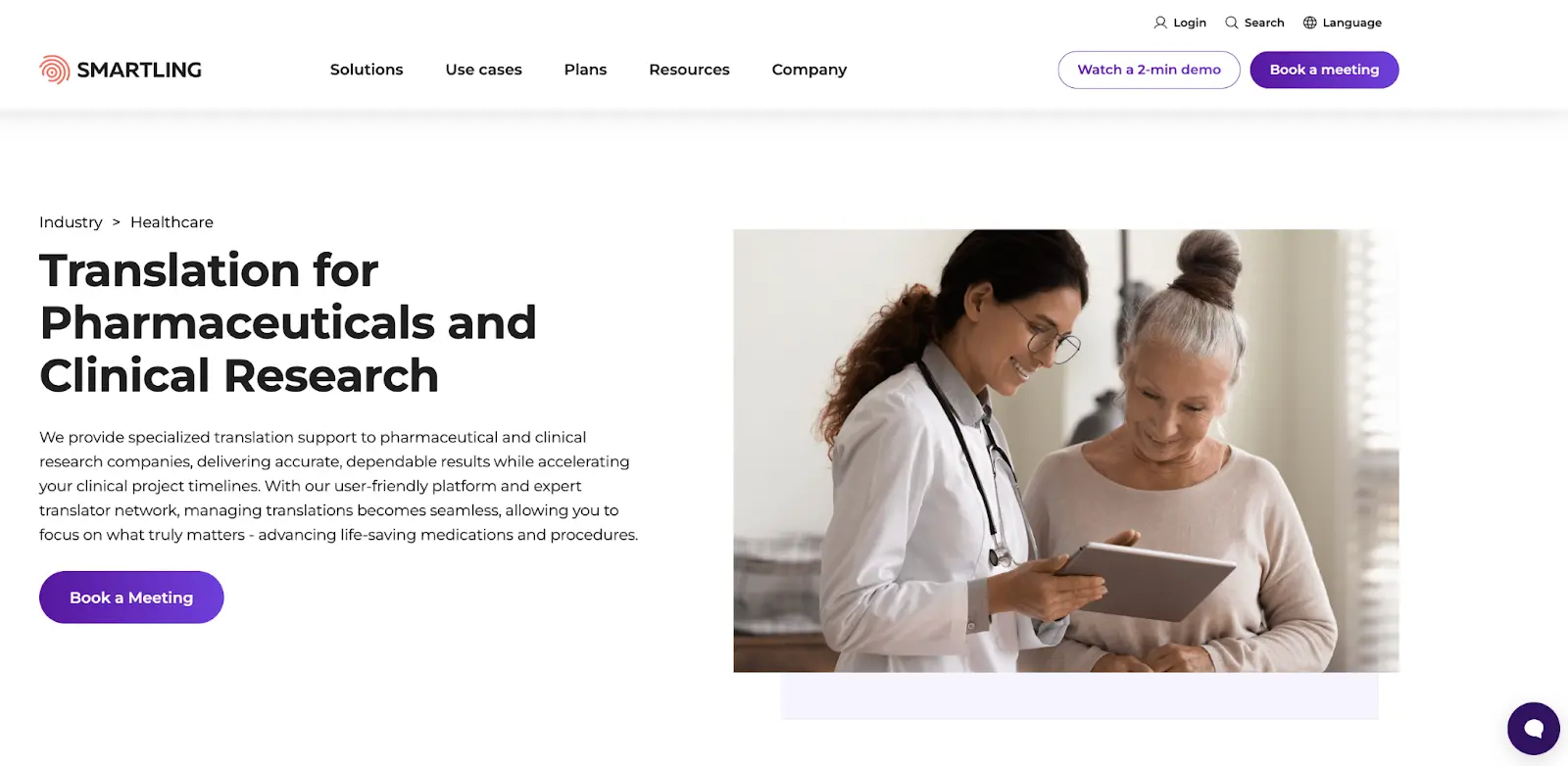
Smartling is a translation platform and language service provider with a growing focus on healthcare and life sciences. It combines a cloud TMS, Neural MT Hub, and managed translation services to help teams translate clinical trial materials, pharmaceutical content, and medical communications at scale.
From a compliance angle, Smartling leans heavily on its certifications: SOC 2 Type II, HIPAA and HITRUST, PCI DSS Level 1, plus ISO 17100, ISO 9001, and ISO 13485 for language services. This makes it attractive for organizations that expect strong platform security and certified life-sciences translation workflows.
Who is Smartling for
Smartling works best for healthcare and life sciences teams that want a mix of technology and services in one vendor, for example: Pharmaceutical and clinical research organizations translating clinical trial documentation, patient-facing materials, and regulatory submissions
Medtech and device companies
Larger healthcare providers that prefer to rely on an external language services team rather than building an in-house vendor network
Smartling is a solid option if you want an AI-enabled translation management system plus a full-service translation partner. Teams that prefer to own their localization stack and keep it tightly embedded into product and engineering workflows often lean toward a platform like Lokalise instead.
Smartling’s healthcare customers include the Butterfly Network and British Medical Journal.
Why choose Smartling for healthcare localization
Smartling is a strong option for healthcare and life sciences teams that want a single vendor for both technology and translation services. Here’s why some organizations choose Smartling for regulated medical and healthcare content:
Strong compliance posture for healthcare: SOC 2 Type II, PCI DSS, plus ISO certifications make Smartling a good fit for organizations that need documented security and quality controls for medical and managed-care content.
Tech and services in one vendor: Smartling combines a cloud TMS with in-house life sciences and managed-care translation services, so teams can run regulated programs (clinical, pharma, health plans) without stitching together multiple suppliers.
Healthcare-focused programs: Dedicated offerings for managed care organizations and medical content (regulatory materials, member communications, health education content) make it appealing if you want an out-of-the-box “health plan/managed care” translation partner.
Smartling also has AI translation capabilities (including MT/LLM orchestration, quality checks, and linguistic QA) that help teams scale high-volume documentation while keeping humans in the loop for safety-critical material.
Pricing
Smartling doesn’t have publicly available pricing. It offers tiered SaaS plans (Core and Enterprise) plus per-word pricing for translation services and AI tiers.
3. Phrase: Secure enterprise TMS for healthcare
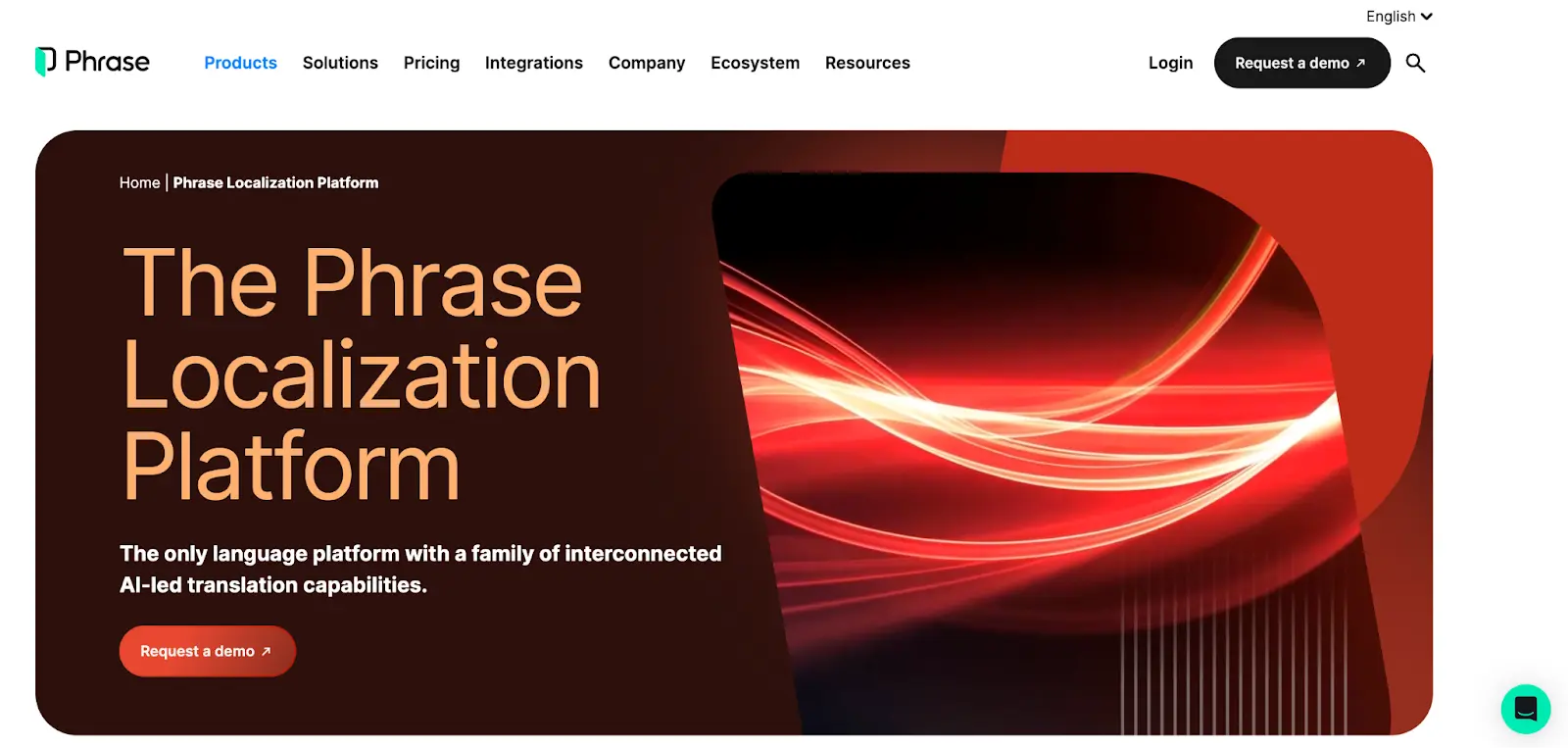
Phrase is a healthcare localization platform that combines a translation management system, developer-focused string management, and AI translation in a single cloud environment. The Phrase runs on ISO 27001–certified infrastructure with encryption in transit and at rest, and supports enterprise controls such as SSO, two-factor authentication, and IP filtering.
For healthcare and life sciences teams, this makes Phrase a viable choice when you need a secure, central TMS that fits into existing security and compliance frameworks (GDPR, PCI DSS, CCPA) and can orchestrate multiple vendors and content types from one place.
🧠 Good to know
Phrase is a solid enterprise option when you want a secure, AI-enabled TMS that plays well with a broad vendor ecosystem. If your priority is to turn localization into a tightly governed “system of record” embedded in your product and engineering workflows, Lokalise will usually feel like the stronger long-term fit for healthcare localization.
Who is Phrase for
Phrase is a good fit for healthcare and life sciences teams that want an enterprise TMS with a flexible vendor setup, for example:
Hospitals and health systems localizing patient portals, websites, and vital documents as part of language access programs
Clinical research organizations managing multilingual trial materials and consent forms with external LSPs
Medtech and digital health companies that need mature automation, analytics, and a broad integration ecosystem for content and documentation
Phrase’s notable healthcare-related customers include Cochrane and Imperial Clinical Research Services.
Why choose Phrase for medical localization
Organizations that want an enterprise hub for large documentation sets and language access programs will likely be happy with Phrase. Here’s what it offers:
Enterprise security and compliance baseline: Phrase runs on an ISO 27001–certified platform with controls aligned to PCI DSS, GDPR, and CCPA, plus enterprise features like SSO, 2FA, and IP allowlisting
Automation and AI for large documentation sets: Phrase Language AI lets you centralize MT engines (e.g., DeepL, others), manage MT profiles, and automate workflows for high-volume content
Open ecosystem and vendor flexibility: Phrase is designed to orchestrate multiple LSPs and internal teams from one platform. If you already have trusted medical translation partners, that’s good to know.
Pricing
Phrase’s pricing for Business Plans starts at $1,045/month for the Team plan (billed annually), with higher tiers (Team, Business, Enterprise) adding more capacity, integrations, and enterprise features such as SSO and advanced TM capabilities.
4. XTM Cloud: life sciences–focused TMS with validated workflows
XTM Cloud is an enterprise translation management system built for high-volume, regulated content. For life sciences and healthcare organizations, it offers validated workflows, complete audit trails, and specialized tools for medical content localization across clinical trials, regulatory filings, and device documentation.
From a compliance perspective, XTM Cloud runs on ISO 27001–certified infrastructure and meets SOC 2 requirements, with features like role-based access control, audit logs, and secure hosting on AWS. Its AI and MT stack is marketed as supporting ISO 27001, GDPR, SOC 2, and HIPAA, with options to control where data is processed and how long it’s retained.
Who is XTM Cloud for
XTM Cloud is a good fit for:
Life sciences companies localizing clinical trial documents, regulatory submissions, and pharma content
Medical device manufacturers that need validated translation workflows and audit trails for IFUs, UIs, and labeling
Large healthcare and pharma organizations that want a centralized TMS for multiple LSPs and internal teams, with strict governance and reporting
XTM Cloud is used by life-science organizations such as Accuray, along with unnamed Fortune 500 pharmaceutical and medical device companies.
Why choose XTM Cloud for healthcare translation
XTM Cloud is usually considered by life sciences and healthcare organizations for three main reasons:
Regulatory-grade security and compliance: ISO 27001–certified, SOC 2–level controls, GDPR support, and HIPAA-ready options, plus data residency and retention settings for sensitive medical content.
Validated workflows and audit trails: Life sciences–specific workflows, full change history, and strong terminology management to support clinical trials and regulatory submissions.
Engine for large, complex documentation sets: Robust TM/terminology plus AI/MT features designed to handle high-volume technical and regulatory content while keeping humans in the loop.
Pricing
XTM Cloud’s public pricing starts at $16,500/year for the Team plan (billed annually), which includes unlimited users, projects, languages, and workflows, plus a word allowance and one connector. Higher Business and Enterprise tiers increase word volumes, add premium or private cloud hosting and more connectors.
There is no free plan available.
Agentic AI is available as an add-on, starting at $20,000/year.
5. Crowdin: Secure and developer-friendly translation system for healthcare
Crowdin is a localization management platform that’s popular with product and engineering teams. It runs on ISO/IEC 27001–certified infrastructure, uses encrypted AWS databases, and supports enterprise controls like SSO, two-factor authentication, IP allowlisting, audit logs, and role-based access.
For healthcare and health tech companies, Crowdin can also be configured for HIPAA-compliant use. On higher plans, it offers GDPR and HIPAA compliance (including the option to sign a BAA for healthcare projects), which makes it a viable option when you need to keep patient or PHI-adjacent content inside a governed localization platform.
Who is Crowdin for
Crowdin is a good fit for:
Digital health and medtech startups that want a developer-friendly TMS with strong security and a modern UI
Product teams localizing web and mobile apps, portals, and marketing sites and collaborating with in-house or agency translators
Organizations that value community translation or open source alongside commercial projects
Crowdin is also used by health-focused companies such as Videra Health and GrandPad, helping them localize patient and caregiver experiences into multiple languages.
Why choose Crowdin for healthcare localization
Crowdin works best when you want a secure, flexible localization hub that product and engineering teams can adopt quickly. Here’s why healthtech companies use it:
ISO 27001 and HIPAA options: ISO/IEC 27001-certified ISMS, GDPR compliance, and HIPAA-ready setups (with BAA on eligible plans) create a solid security baseline for PHI-adjacent content.
Enterprise security features: Encrypted AWS hosting, SSO, 2FA, IP allowlisting, audit logs, and granular roles help teams control who can access sensitive projects and how activity is tracked.
AI + MT flexibility: Access to multiple MT providers and Crowdin AI, plus terminology management and version control, works well for high-volume UX copy, help centers, and non-clinical documentation.
Pricing
Just like Lokalise, Crowdin offers a permanent Free plan and a free trial. Its paid plans include Pro (from around €45/month), Team (from around €135/month), Team+ / Enterprise (from around €405/month), and a Business plan with custom quotes. Listed prices are paid annually.
Compare the most secure healthcare localization tools in a glance
Compare how the top five healthcare localization platforms stack up on security, data governance, and audit-ready workflows. The table below shows their certifications (SOC 2, ISO 27001), healthcare-specific controls, AI capabilities, and pricing so you can quickly see which stands out as the most governed, audit-ready option.
Tool
Security and compliance
Governance and healthcare workflows
AI capabilities
Pricing
Lokalise
SOC 2 Type II, ISO 27001/27017, encryption in transit and at rest, GDPR-aligned; designed for PHI-adjacent and safety-critical healthcare content (learn more here)
Traceable, GxP-aligned workflows with explicit roles and approvals; full audit trails per string (version history, status, activity); status-based quality gates; dedicated workflows for regulated content; deep Figma, Git, CI/CD, and CMS integrations; practical “system of record” for multilingual healthcare content.
Standard AI translations included on paid plans (bulk AI tasks, in-editor suggestions, AI quality checks); Enterprise tiers built for regulated workloads with stricter governance and higher volumes. Learn more here.
Permanent Free plan + 14-day trial. Paid plans from $144/month (billed annually), usage-based (capacity over seats); Enterprise adds custom security/compliance and advanced approval workflows.
Smartling
SOC 2 Type II, HITRUST, PCI DSS Level 1, plus ISO 17100, ISO 9001, ISO 13485 for language services; strong compliance posture for healthcare.
Cloud TMS with workflows for clinical trials, pharmaceutical content, and medical communications; attractive when you want platform security plus certified services rather than a product-embedded system of record.
AI-enabled TMS (Neural MT Hub) plus in-house life-sciences translation services; MT/LLM orchestration, quality checks, and linguistic QA to scale documentation with humans in the loop.
No public list pricing. Tiered SaaS plans (Core, Enterprise) plus per-word pricing for translation services and AI
Phrase
ISO 27001-certified infrastructure with encryption in transit and at rest; enterprise controls (SSO, 2FA, IP filtering) aligned with GDPR, PCI DSS, CCPA.
Secure central TMS that fits into existing compliance frameworks and orchestrates multiple LSPs and content types; strong governance baseline
Phrase Language AI with centralized MT management (e.g., DeepL and others), MT profiles, and automation for high-volume documentation and language access programs.
Business plans start at $1,045/month for the Team plan (billed annually); higher Business and Enterprise tiers increase capacity, integrations, and enterprise features. No permanent free plan.
XTM Cloud
ISO 27001-certified, SOC 2-level controls, GDPR support, HIPAA-ready options; secure AWS hosting with data residency and retention settings for sensitive content.
Life-sciences-specific, validated workflows with complete change history and strong terminology management for clinical trials, regulatory submissions, and device docs
Robust TM + terminology plus AI/MT features for large technical and regulatory sets; Agentic AI available as an add-on.
Public pricing from $16,500/year for the Team plan (billed annually); Business and Enterprise tiers add volume, connectors, and hosting options; no free plan. Agentic AI add-on from $20,000/year.
Crowdin
ISO/IEC 27001-certified ISMS, encrypted AWS databases, GDPR compliance, HIPAA-ready configurations on higher plans (with BAA), plus SSO, 2FA, IP allowlisting, audit logs, and role-based access.
Flexible, project-level permissions and audit logs suitable for PHI-adjacent content in apps, portals, and websites; strong fit for UX copy, portals, and non-clinical docs rather than heavily regulated life-sciences workflows.
Multiple MT providers plus Crowdin AI, combined with terminology management and version control for high-volume UX copy, help centers, and other non-clinical documentation.
Permanent Free plan + free trial. Paid plans: Pro (~€45/month), Team (~€135/month), Team+/Enterprise (~€405/month), and Business (custom), billed annually.
How to choose the best healthcare localization tool
Choosing a healthcare localization platform is about features and risk management. Before you commit, make sure each tool on your shortlist can demonstrate how it handles security, governance, and AI usage across your real workflows.
A simple way to move forward is to:
Map your requirements: List the content types you need to localize (apps, portals, IFUs, clinical docs) and the regulations you must align with (GxP, ISO 27001, GDPR).
Shortlist and test: See if you can run a small pilot with 2-3 tools from this list, using real healthcare content and involving security, legal, and localization stakeholders.
Review auditability and ownership: Check how easy it is to trace changes, lock down high-risk content, and integrate the platform into your existing product and engineering stack.
Lokalise is designed to support this kind of governed, audit-ready setup for healthcare teams, with strong security certifications and workflows you can adapt to your validation requirements.
Mia has 13+ years of experience in content & growth marketing in B2B SaaS. During her career, she has carried out brand awareness campaigns, led product launches and industry-specific campaigns, and conducted and documented demand generation experiments. She spent years working in the localization and translation industry.
In 2021 & 2024, Mia was selected as one of the judges for the INMA Global Media Awards thanks to her experience in native advertising. She also works as a mentor on GrowthMentor, a learning platform that gathers the world's top 3% of startup and marketing mentors.
Earning a Master's Degree in Comparative Literature helped Mia understand stories and humans better, think unconventionally, and become a really good, one-of-a-kind marketer. In her free time, she loves studying art, reading, travelling, and writing. She is currently finding her way in the EdTech industry.
Mia’s work has been published on Adweek, Forbes, The Next Web, What's New in Publishing, Publishing Executive, State of Digital Publishing, Instrumentl, Netokracija, Lokalise, Pleo.io, and other websites.
Mia has 13+ years of experience in content & growth marketing in B2B SaaS. During her career, she has carried out brand awareness campaigns, led product launches and industry-specific campaigns, and conducted and documented demand generation experiments. She spent years working in the localization and translation industry.
In 2021 & 2024, Mia was selected as one of the judges for the INMA Global Media Awards thanks to her experience in native advertising. She also works as a mentor on GrowthMentor, a learning platform that gathers the world's top 3% of startup and marketing mentors.
Earning a Master's Degree in Comparative Literature helped Mia understand stories and humans better, think unconventionally, and become a really good, one-of-a-kind marketer. In her free time, she loves studying art, reading, travelling, and writing. She is currently finding her way in the EdTech industry.
Mia’s work has been published on Adweek, Forbes, The Next Web, What's New in Publishing, Publishing Executive, State of Digital Publishing, Instrumentl, Netokracija, Lokalise, Pleo.io, and other websites.
Season 1, Episode 2: AI amnesia, health tech, and why humans are hard to emulate
In this episode of AI Navigators, we sit down with Sasho Savkov, Engineering Manager for the AI/ML team at Lokalise. With a PhD in clinical information extraction and nearly a decade building healthcare solutions, Sasho brings a unique perspective on what’s actually working versus what’s just noise. He challenges one of the biggest assumptions in AI today: that current single-shot learning approaches will lead us to human-level intelligence. His insights rev
How to efficiently handle medical software localization (+ 3 real examples)
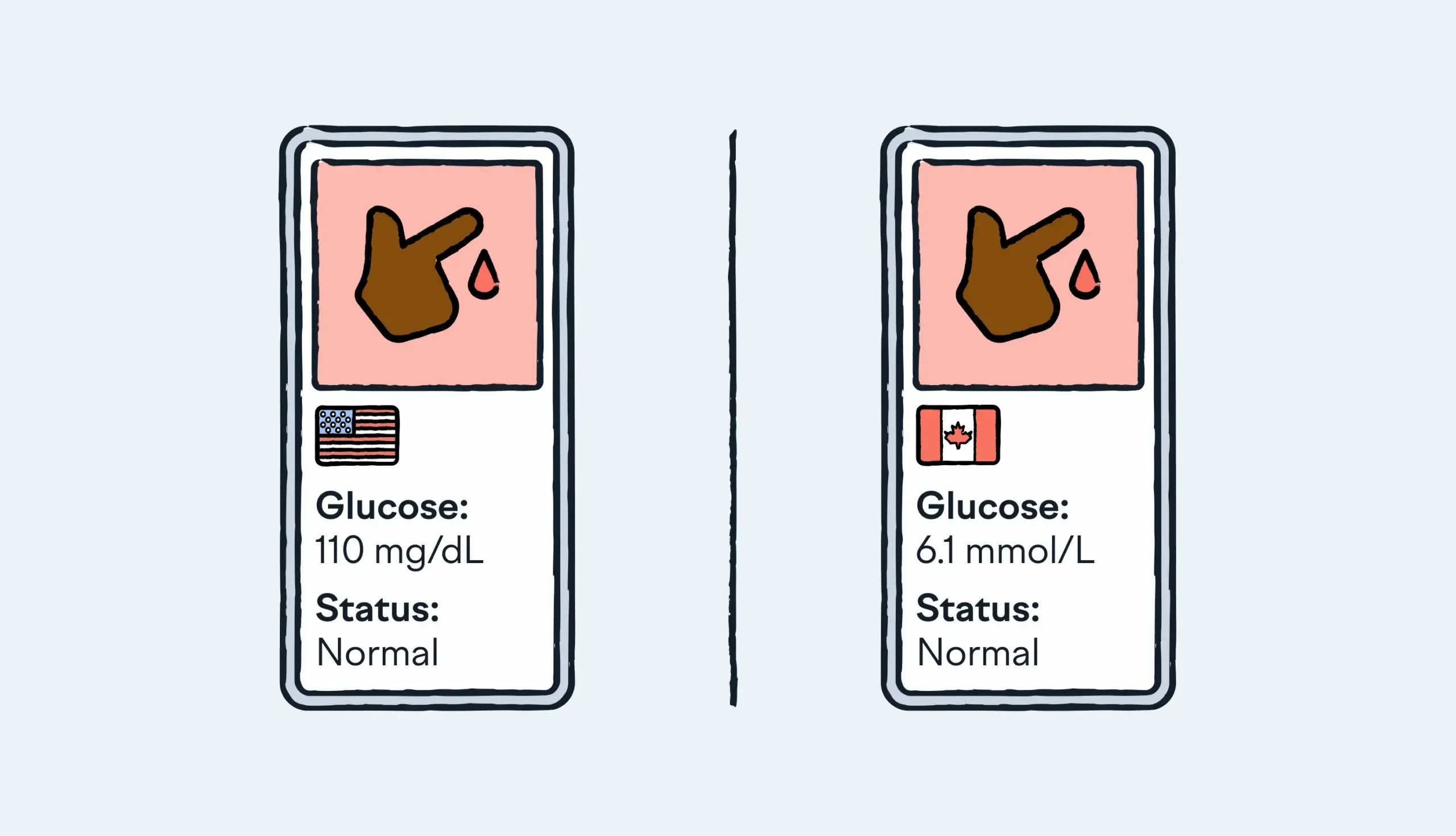
Medical software localization reshapes every part of your app. The goal is to make it fit seamlessly into a new healthcare system, regardless of the country and language. Will the French clinicians read dosage instructions in the units they expect? Will a German regulator raise an eyebrow at an English-only consent form? Your job is to ensure everything from text and drug units to date formats, error messages, privacy wording—all work as intended and feel native to the user. Miss
The real-world applications of machine translation
Machine translation (MT) is currently being employed in areas like customer support, e-commerce, healthcare, education, government resources, instruction manuals and social media in order to enable multilingual communication in a cost-effective way. While it’s been around for decades, it’s only in recent years that individuals and organizations have started relying on it for their everyday needs. So much so that, according to