







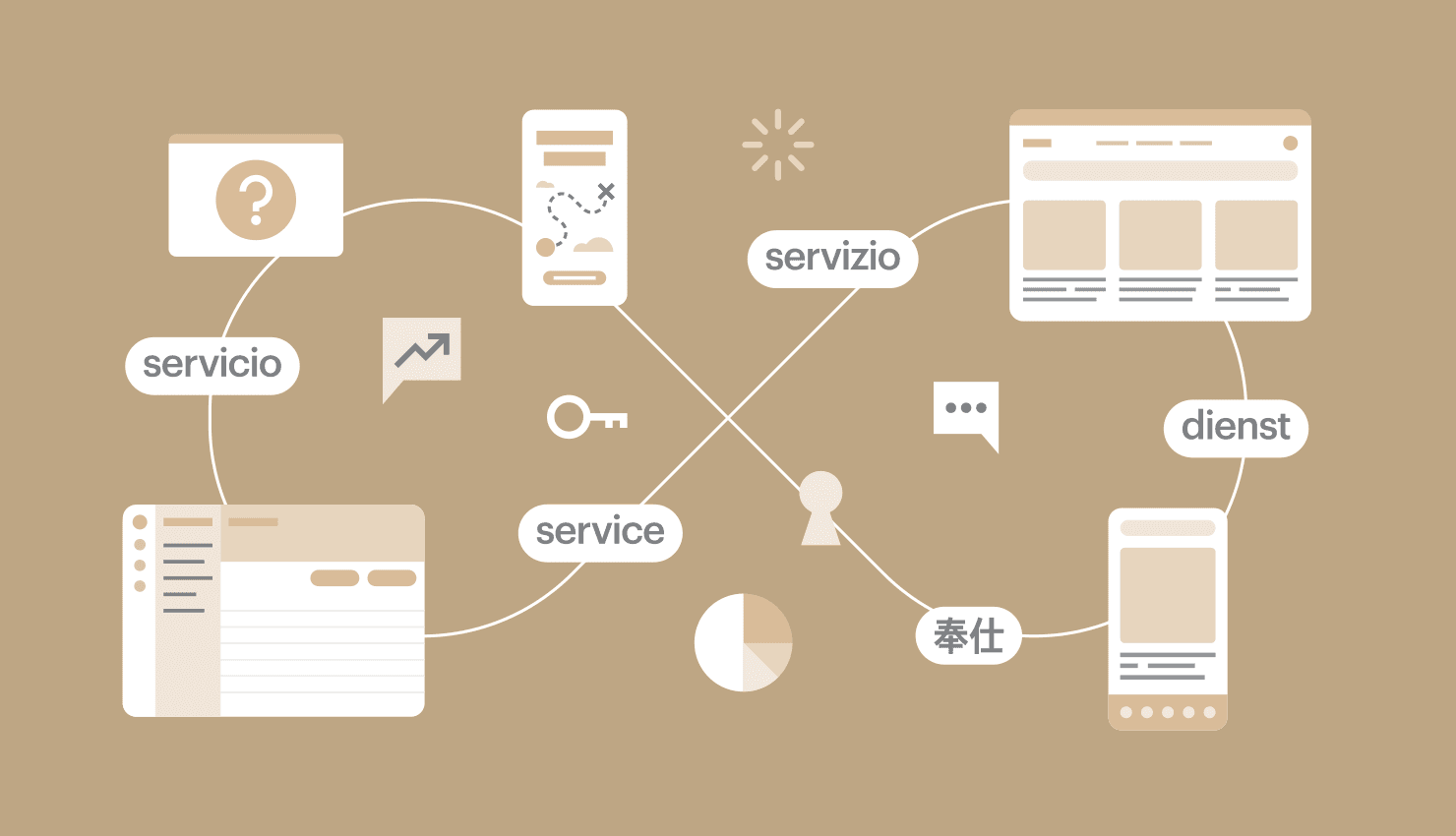
Cut localization from your backlog

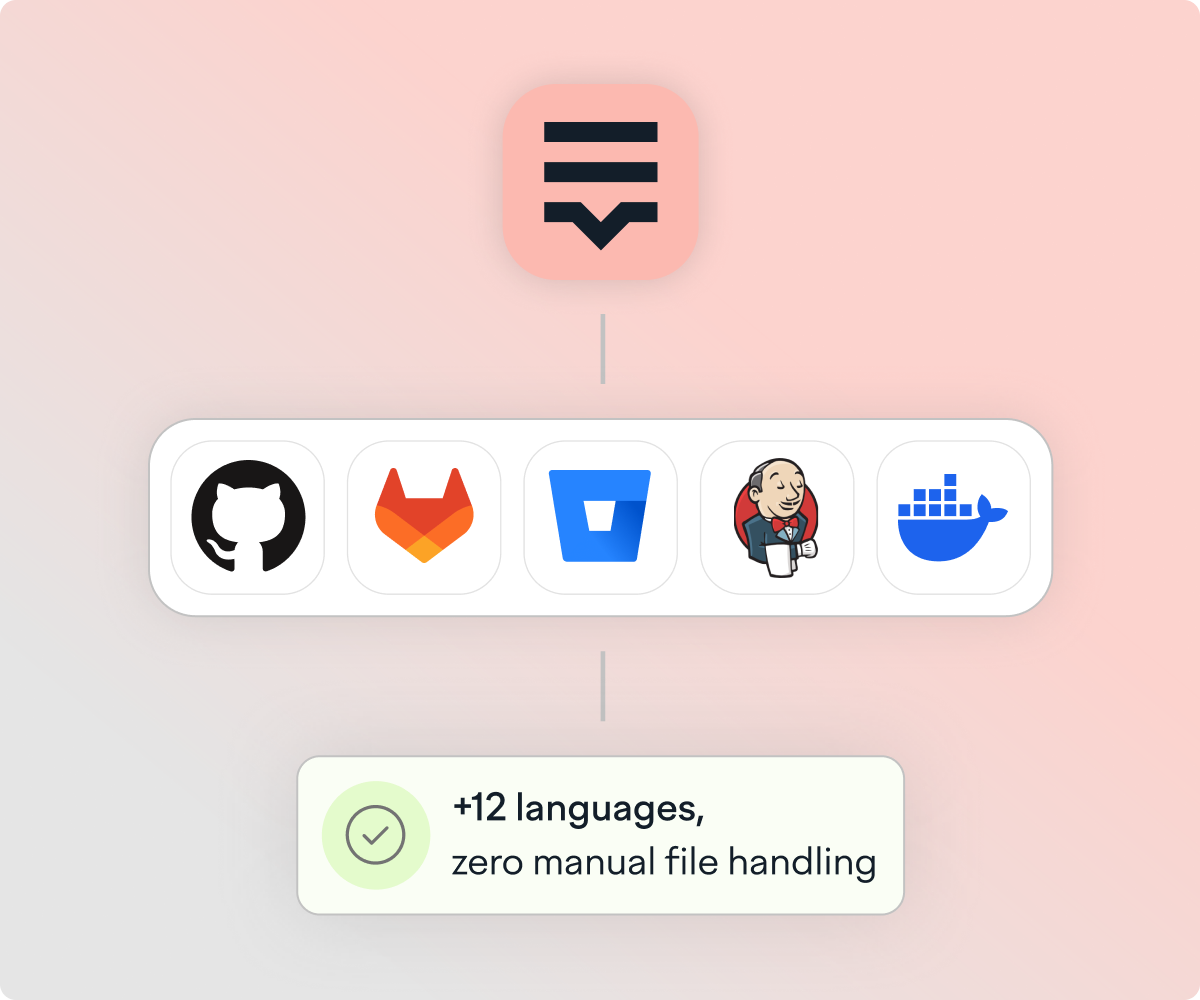
Lokalise connects to GitHub, GitLab, Bitbucket, and your CI/CD pipeline so translation runs in parallel with every build, no manual file management, no localization tickets blocking releases. Teams at IBM, Bosch, and JP Morgan use Lokalise to localize at the same cadence they deploy code.

Lokalise CI/CD localization workflow

Trusted by 1 million users across 3,000+ companies. From scale-ups to the Forbes Global 2000

  • life360 logo
  • pleo logo
  • coachhub logo
  • blockchain logo
  • hibob logo
  • king logo
  • telefonica logo
  • whirlpool logo
  • hello fresh logo
  • dhl logo
  • orange logo
  • hyundai logo
  • shell markethub logo
  • life360 logo
  • pleo logo
  • coachhub logo
  • blockchain logo
  • hibob logo
  • king logo
  • telefonica logo
  • whirlpool logo
  • hello fresh logo
  • dhl logo
  • orange logo
  • hyundai logo
  • shell markethub logo

“The extensive CLI tooling also makes it easy to implement the localisation process into your development pipeline.”

Solutions Architect, IT & Services (1,001–5,000 employees), Capterra, January 2025

“Where it took us around three weeks for a developer’s flow to implement changes in Germany, launching our services in new European markets with Lokalise took us only 1 to 1.5 weeks.”

Tech Lead, Lemonade

lemonade-2x.svg

“Before Lokalise, it took developers at least half a day to manage translations and add new keys, whereas, with Lokalise in place, they spend about 80–90% less time on the same tasks.”

Senior Product Manager, Indeavor

indeavor-logo-2x.png

The translation tool designed for developers

Code repositories

Code repositories

Sync translation projects with the most popular code repositories — GitHub, GitLab, Bitbucket, and Azure Repos. Integrations are available on all plans.

Branching

Branching

Work on multiple branches of your project at the same time. Merge in any direction when ready.

Over-the-air SDKs

Over-the-air SDKs

Use our over-the-air (OTA) SDKs to send translation updates to iOS, Android, and Flutter apps, or create your own OTA SDK using our public OTA API.

Webhooks

Webhooks

Automatically notify third party apps, in real-time, about events happening in Lokalise.

Custom processors

Custom processors

Automate your pre- and post-translation workflows by running them as part of the upload and download process with Lokalise.

Custom ISO codes

Custom ISO codes

Configure a custom language code and name for each file format exported.

S3 and GCS integration

S3 and GCS integration

Export language files to Amazon S3 or Google Cloud Storage or to a content distribution network directly from Lokalise.

Plurals

Plurals

Complete support for plurals. Lokalise adds plural forms to every language automatically. The number and naming of the plural forms follow the Unicode guidelines. Alter them if needed.

Key referencing

Key referencing

Link one key to another by using referencing placeholders. Update a translation in one key and all referenced keys will also be updated.

Tags

Tags

Organize keys in groups. Manage, review, filter, and export keys.

Project snapshots

Project snapshots

Create and retrieve backups of any translation project. Set up automatic snapshots and make data recovery quick and easy.

CLI

CLI

Lokalise CLI v2 allows you to manipulate any object or data in your Lokalise workspace.

MCP server

MCP server

Give Cursor, Claude, ChatGPT, and any MCP-compatible tool direct access to your Lokalise project.

Import and export your files in any format

iOS file formats

iOS

.strings, .stringsdict, .plist, .xliff, .arb, .xcloc

Android file formats

Android

.arb, .xml

Web file formats

Web

.po, .pot, .properties, .js, .json, .resx, .php, .ini, .yml, .xlf, .csv, .ts

Other file formats

Other

.xls, .xlsx, .stf, .doc, .docx, .html, .srt, .pptx, .idml

AI translation built into the pipeline

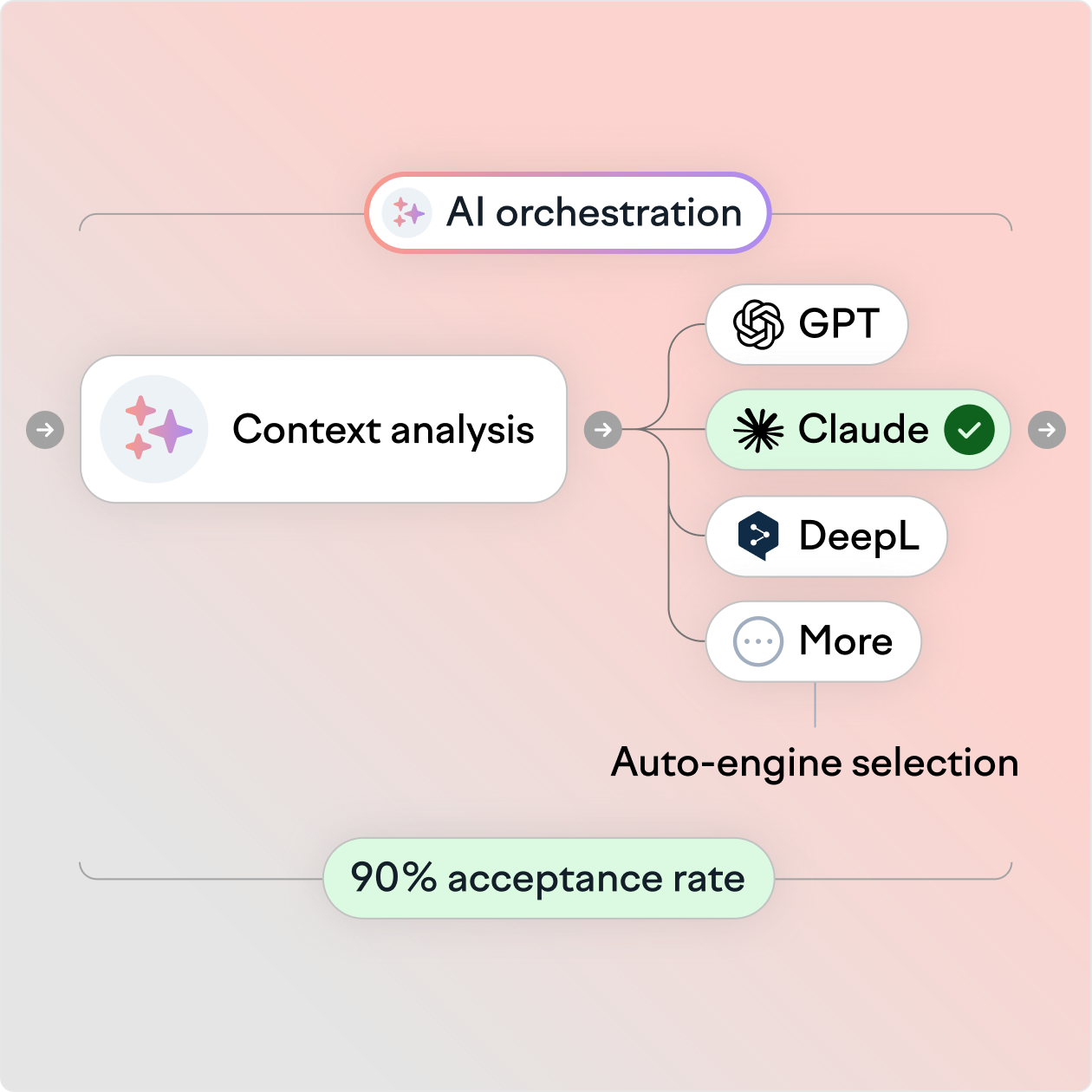
Lokalise AI translates new strings automatically as they are committed to a project. Custom AI profiles use translation memory and glossaries to produce output consistent with your existing terminology — no prompt engineering required. AI Scoring evaluates every translation against MQM quality criteria in real time and routes high-confidence strings to publish automatically, flagging only what needs human review. For development teams, this means the localization step in the pipeline requires less manual oversight without trading off quality. Teams using Custom AI profiles reach 90%+ acceptance rates, reducing the review queue to under 20% of output.

Lokalise AI translation pipeline

Frequently asked questions

How does Lokalise integrate with GitHub, GitLab, and CI/CD pipelines?

What are Lokalise's over-the-air (OTA) SDKs?

Does Lokalise have a public REST API?

How does Lokalise help development teams reduce localization bottlenecks?

What security and access controls does Lokalise offer for development teams?

Keep learning

Continuous_localization

How to implement continuous localization in your CI/CD workflow

What if your translations updated the moment your code changed? Continuous localization is a DevOps-aligned workflow where translation is integrated into the software development lifecycle (SDLC). Unlike traditional waterfall methods, it automates the synchronization between code repositories and translation platforms, so global content updates in real time as new code is pushed to production. This removes translation latency, keeps context intact, and ensures every market sees th

Read more How to implement continuous localization in your CI/CD workflow
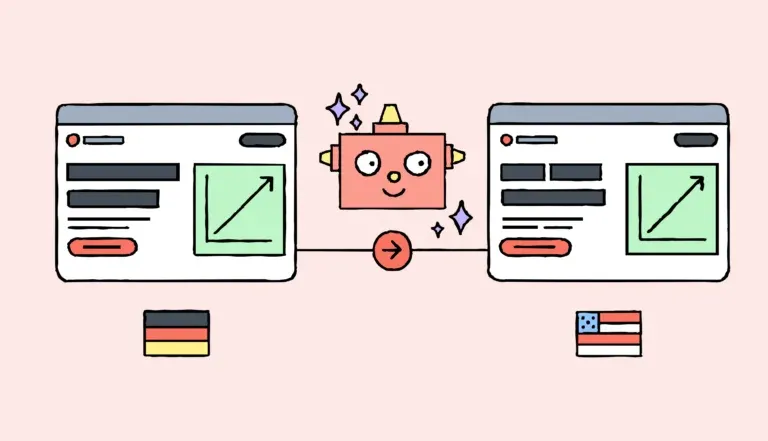
how AI translation works

How AI translation works (and why it’s better than you think)

Ever wondered what actually happens behind the scenes when you hit “Translate” in an app or website? AI translation tools seem almost magical. What is AI translation? It's the use of artificial intelligence to turn content from a source text into another language in seconds. But behind that quick result is a lot of clever technology doing the heavy lifting.

Read more How AI translation works (and why it’s better than you think)

chatgpt vs localization platform

ChatGPT vs. a localization platform: Which translation solution is right for your business?

Translation used to be a bottleneck for businesses looking to grow internationally. Thanks to AI, now it can happen in seconds, which changes how teams make decisions about localization. ChatGPT can produce quick translations for many everyday needs. But when quality requirements rise or the workload grows, teams start running into familiar problems: inconsistent terminology, formatting and placeholder issues, missing context, and a lack of review workflows. That’

Read more ChatGPT vs. a localization platform: Which translation solution is right for your business?

Want to ensure your next release is on time?


See why +10,000 developers use our tools to streamline their localization process.


Try all features for 14 days · No credit card required