Campaigns break string-based localization workflows
Traditional software localization is built for segments, owned by developers, and shipped in CI/CD pipelines. That works well for short-form content such as UX snippets, buttons, and navigation labels.
But marketing localization isn’t software strings: it is often long-form, lives in a CMS rather than a code repository, and needs frequent updates. Persuasion, brand voice, narrative flow and cultural relevance need to be preserved, and reviewers need to judge them in context. The work is less about translating isolated strings and more about adapting the message for a market.
A correct translation can still miss the mark
A marketing translation can be accurate, and still fail to achieve its intended purpose. Translate a campaign from the US with the headline “Get ready for summer” in Brazil, and the translation “Prepare-se para o verão” will be correct. The only issue? It will ask shoppers to get ready for summer, just as winter begins in Brazil.
For content to perform, it needs Language-Market Fit (LMF). In contrast to Product-Market Fit, which looks at to what degree a product satisfies a customer need, Language-Market Fit ensures that the message lands in the market.
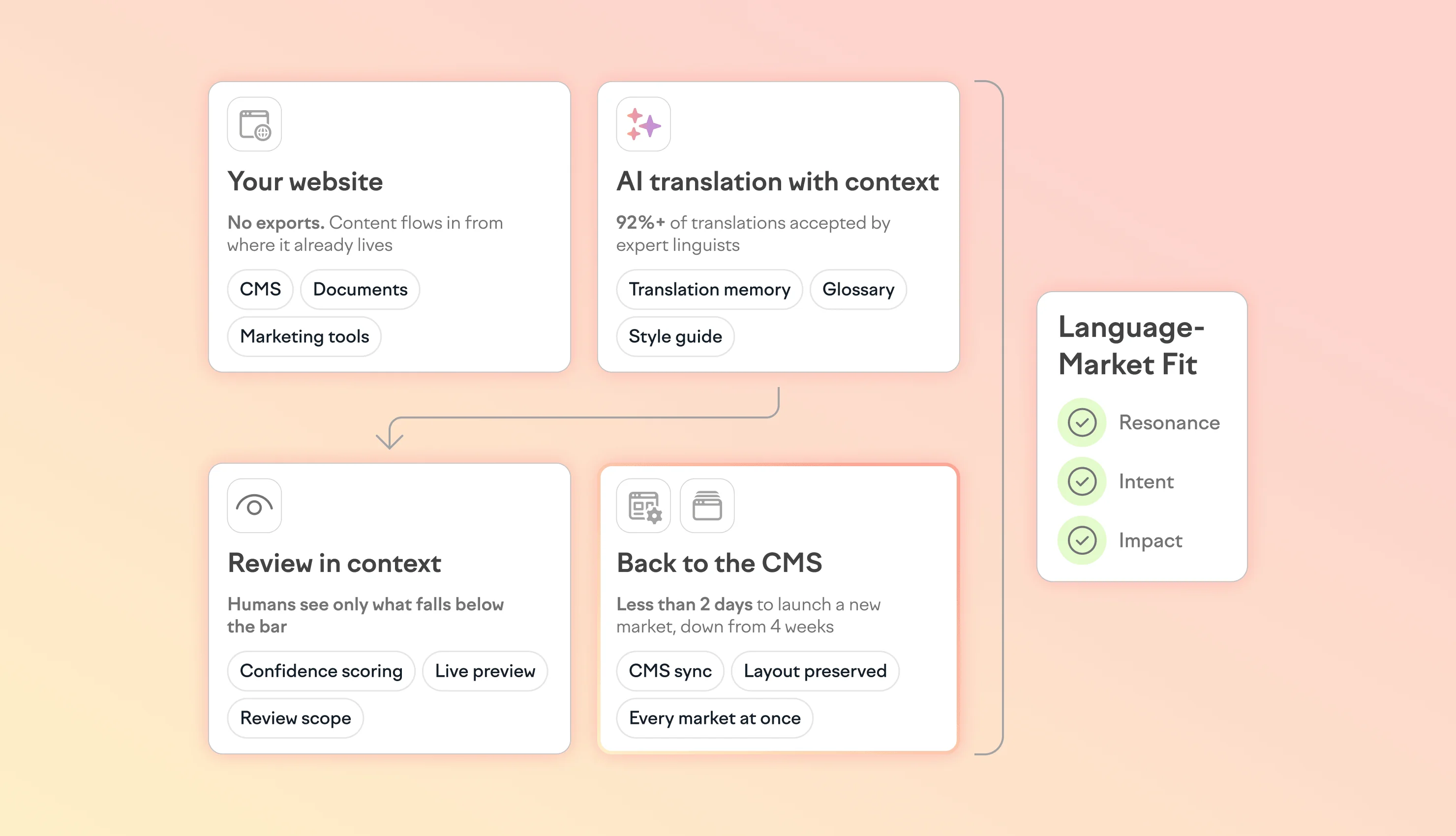
Each piece of content needs to be adapted to the local audience, channel, and business context, and evaluated based on three key criteria:
- Resonance: Does the content sound like a trusted local peer?
- Intent: Does it do the job it was created for?
- Impact: Does it contribute to outcomes such as conversion, retention, or revenue?
Language Market Fit is often faster and cheaper to test than Product-Market fit, since you can try new messaging, headlines, and value propositions before you build a single new feature.
LMF should be built into the marketing localization workflow
For Language-Market Fit to be achieved consistently at scale, teams must first solve the orchestration bottleneck. That can be done by codifying market nuances into terminology, style guidance, and local context.
For instance, at Lokalise, software and marketing teams work in separate workspaces but share the same language assets and analytics. That way brand and market knowledge is shared through translation memory, terminology, and style guidance while teams can translate content within the tools they already use.
Here is what a good marketing localization workflow looks like:
- Bring content into one place
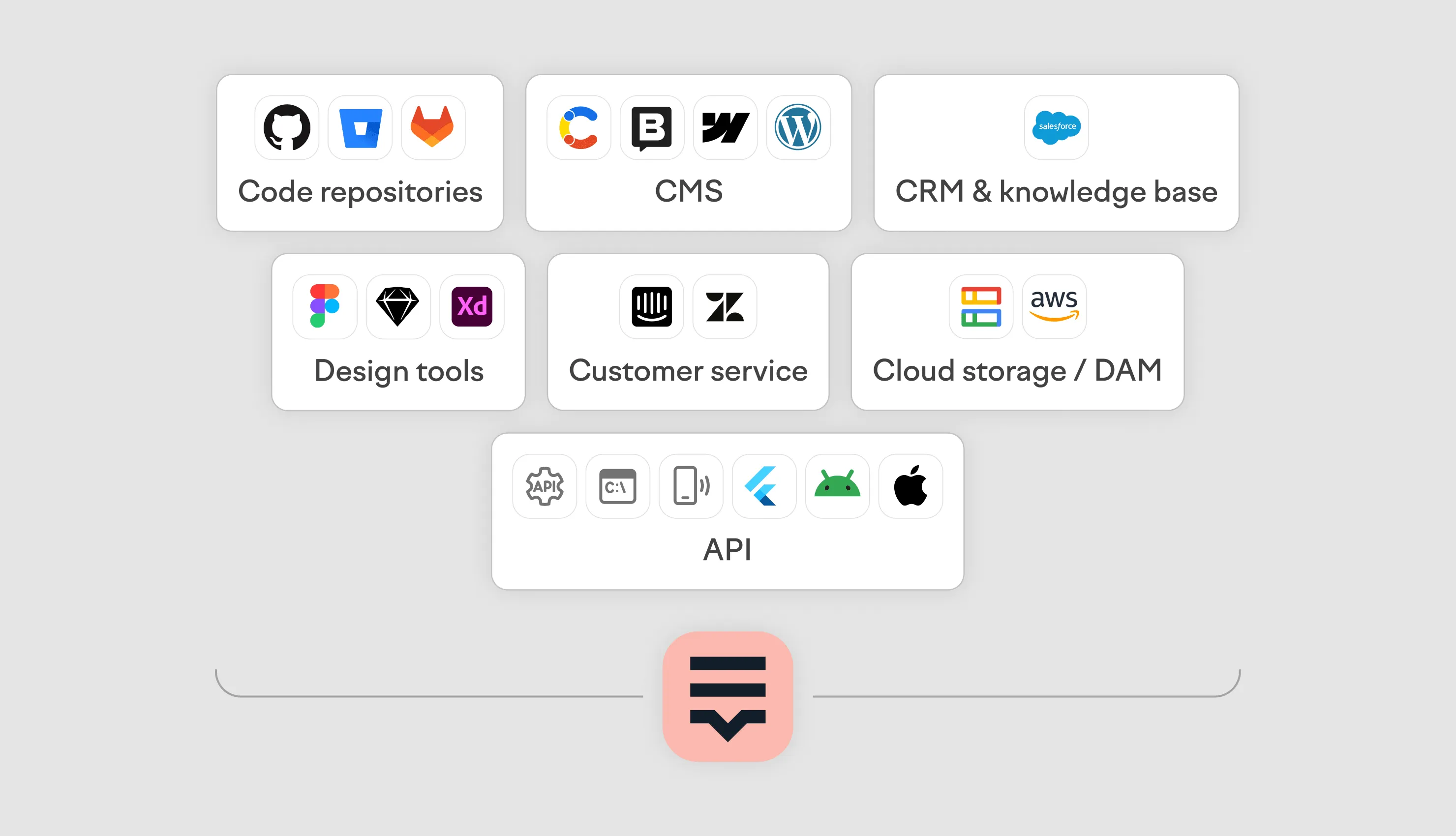
Connect the CMS, marketing tools, and document sources where localized content is created. Teams should not have to export files, chase versions, or reformat content before work begins. - Define the rules
Set quality thresholds, approval steps, and governance requirements by content type and risk. A legal update needs a different review path from a product page or campaign asset. - Apply language assets
Use translation memory, glossary, and brand voice across every job. This turns a generic AI draft into output that sounds like your brand. - Use automation to route work
Within systems like Lokalise, AI can produce translations with 92%+ of translations accepted by expert linguists. Score each translation against a quality bar: content that meets the threshold can be published automatically, while material that needs a human eye gets sent to reviewers. - Review in the context
Reviewers should be able to see the translated text alongside a preview of the final page or asset. Tone, length, formatting, and layout issues are easier to catch before content reaches production. - Return approved content to its source
Publish directly back to the CMS or export translations while preserving the original layout. The workflow should end where the content needs to go, rather than creating another handoff.
In our recent Inside Vantage webinar, we showed a demo of how this localization workflow runs end to end, how it should be set up differently than traditional software localization, and how we’ve built Lokalise to serve both.
One localization workflow, three markets
Run this way, marketers can launch a new market in less than 2 days, down from 4 weeks, while saving up 80% on translation costs on average compared with fully human translation.
For instance, marketers can easily upload a long-form blog post in Vantage, or integrate directly to the tools where the content lives. AI then translates the content in batches so each segment keeps its surrounding context.
Teams define the quality bar, and AI then only sends translations that fall below for review. For example, you might decide that anything below a 90% quality score should be routed to a human, and the rest published automatically. That way, teams only see what’s flagged for review, and can easily fix any issues in a live preview of the page. A sentence that ran too long can be shortened and checked against the layout in one step, with up to 80% less post-editing as a result.
We recently applied the same workflow to our own website, lokalise.com. We selected 33 priority pages, around 60,000 words, and localized them into German, Spanish, and French. The work ran in seven review batches with a turnaround of five days each. Every batch came back as drafts for a final check in context before anything went live.
Marketing localization must move at the speed of AI
AI can spin up a campaign or a landing page in minutes. That speed means little if every asset waits weeks in a ticket queue.
Marketers now need to solve the orchestration bottleneck, and that starts with ownership. For localization to keep pace with the rest of the business, marketers need a self-serve workflow that lets them localize content without submitting tickets or chasing progress.
That does not exclude localization teams from the process. Localization leaders still own the language assets that shape tone of voice and cultural nuance in each market. Connected through one workflow, teams can publish in every market, as one brand, and always on time.
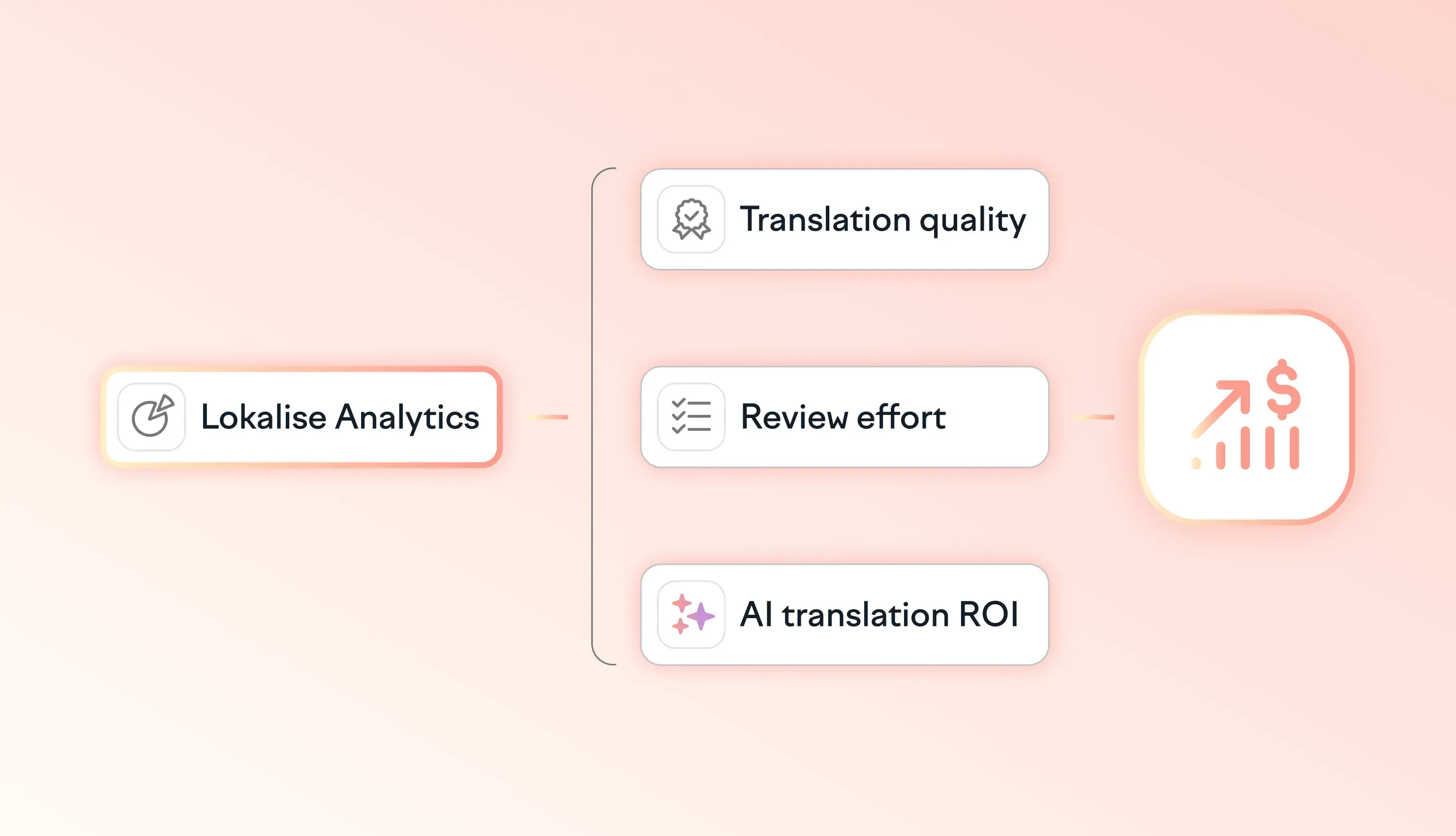
Optimizing for speed wins only half the battle. Each translation also needs to resonate with local buyers, do the job it was intended to do, and drive measurable outcomes such as conversion or revenue.
If AI gets you into a market, Language-Market Fit makes you belong. Good orchestration is the bridge between the two.