
How Elli uses Lokalise to build a cohesive global customer experience and launch new features in 23 languages every week
"When we initially launched our app in our first European markets, it took us around 2–3 months to get the entire app translated. Since we switched to Lokalise, the localization bit of going live in new markets is now down to ~2–3 weeks."
Ganesh Bala Subramanian and Luisana Valero
Tech Lead and User Experience Designer at Elli – A Brand of the Volkswagen Group




Elli is an electromobility company founded in 2018. Through their network of 500,000 charging stations throughout Europe and mobile app now available in 23 languages, they’re making the shift to green energy accessible to everyone.
As the centerpiece of Elli’s digital ecosystem, the app represents a critical part of their customer experience. Continuously shipping new localized features is key to their international customer engagement and expansion plans. As Elli looked to continue expanding their electromobility brand globally, they quickly found that there was a hurdle to navigating this with speed and accuracy.

Challenges
Manual, error-prone localization processes
“Two and a half years ago, we had a very lengthy localization process which involved translation services and spreadsheets. As you can imagine, this wasn't very efficient,” says Luisana. The team also tried other TMS options but none were right for them.
Instead of focusing on delivering a smooth experience for customers, Ganesh and the team were bogged down in feedback cycles that delayed projects by up to a month.
“We would send the content in a spreadsheet to a project manager at our language vendor, and then they would send us the translated content back. Plus, we couldn’t easily provide translators with context like screenshots to show what the app looks like and where the text fits on the UI, which led to increased revision cycles.”
We would send the content in a spreadsheet to a project manager at our language vendor, and then they would send us the translated content back. Plus, we couldn’t easily provide translators with context like screenshots to show what the app looks like and where the text fits on the UI, which led to increased revision cycles.
Difficulties matching release cycles with localization
“Matching localization with the speed of development was a massive pain,” says Ganesh. Instead of focusing on moving quickly, he struggled to match quality localization with the pace of development and every feature release.
When a continuous localization workflow is actually a person and a spreadsheet, it has costly limitations. As a developer that relies on continuous integration/deployment, you want to incorporate localization into your integrated tech stack. The most effective relationship between localization and development requires advanced integration and the maximum level of automation possible.
“I want to release my application fast, right? I'm ready with the feature. It looks good. I just want to ship the product, but localization is stopping me from going live today. And localizing into all the languages we support could mean waiting an extra four weeks.”
“It’s painful. You work really hard and now you aren't in control of what comes afterwards,” says Ganesh.
He explains that communication with translators was also difficult: “If, for example, a Spanish translator had a question about the app, we didn’t have any established channels to easily communicate with them.” Not being able to work with translators directly meant poor translation quality and lengthy turnaround times.

Solution
Scalability, integration, and speed to market were all important considerations in Elli’s decision process. Lokalise met these expectations by providing:
- An all-in-one solution that integrated with the tech stack, continuous integration/continuous delivery (CI/CD) workflows, and seamless communication between stakeholders
- The ability to scale a number of languages fast and support a rapidly growing company and team
- A deeply consultative approach
A consultative approach leads to streamlined implementation
Throughout the initial implementation and subsequent expansions, Lokalise provided ongoing, hands-on guidance and expertise. Ganesh worked closely with the Lokalise team.
“Niklas (our CSM at Lokalise) has been there right from the start. When we wanted to move or migrate all of our projects from our previous TMS to Lokalise, he helped us get set up and gave us guidance on best practices.”
To ensure Elli’s success, the team at Lokalise put Ganesh in touch with a localization engineer at Lokalise who advised on integrating Elli’s various systems. Fitting Lokalise into Elli’s tech stack (Slack, Figma, Wix Answers, and integrations that other teams use) helped maximize automation while minimizing manual, human work.
In addition to supporting the day-to-day management and optimization of existing Lokalise implementations, the partnership between Lokalise and Elli extended to include solutions based on Elli’s unique needs.
“When we got to a point where our needs were more unique, Lokalise put us in touch with partners to make things happen,” says Ganesh.
For example, all of Elli’s FAQs for the app are hosted in Wix Answers. The problem? It didn’t have a direct integration with Lokalise. “The initial solution was ‘let's just use Lokalise and Crowdin’ (which offered an integration at the time). But then we would’ve regressed to everyone doing their own thing without a streamlined approach.”
“We asked if Lokalise could help us here and they were happy to get their Lead Solutions Architect involved in a discussion with Wix Answers and Elli. Together, we were able to build a solution, so we could continue using Lokalise for everything instead of having to use two tools. This was really a standout thing for me. It prevented a lot of complexity and saved us the costs of using another platform.”
Lokalise also connected Elli with a new language vendor based on their requirements so that they could establish a long-term partnership and improve translation quality.
A collaborative tool with maximum integration
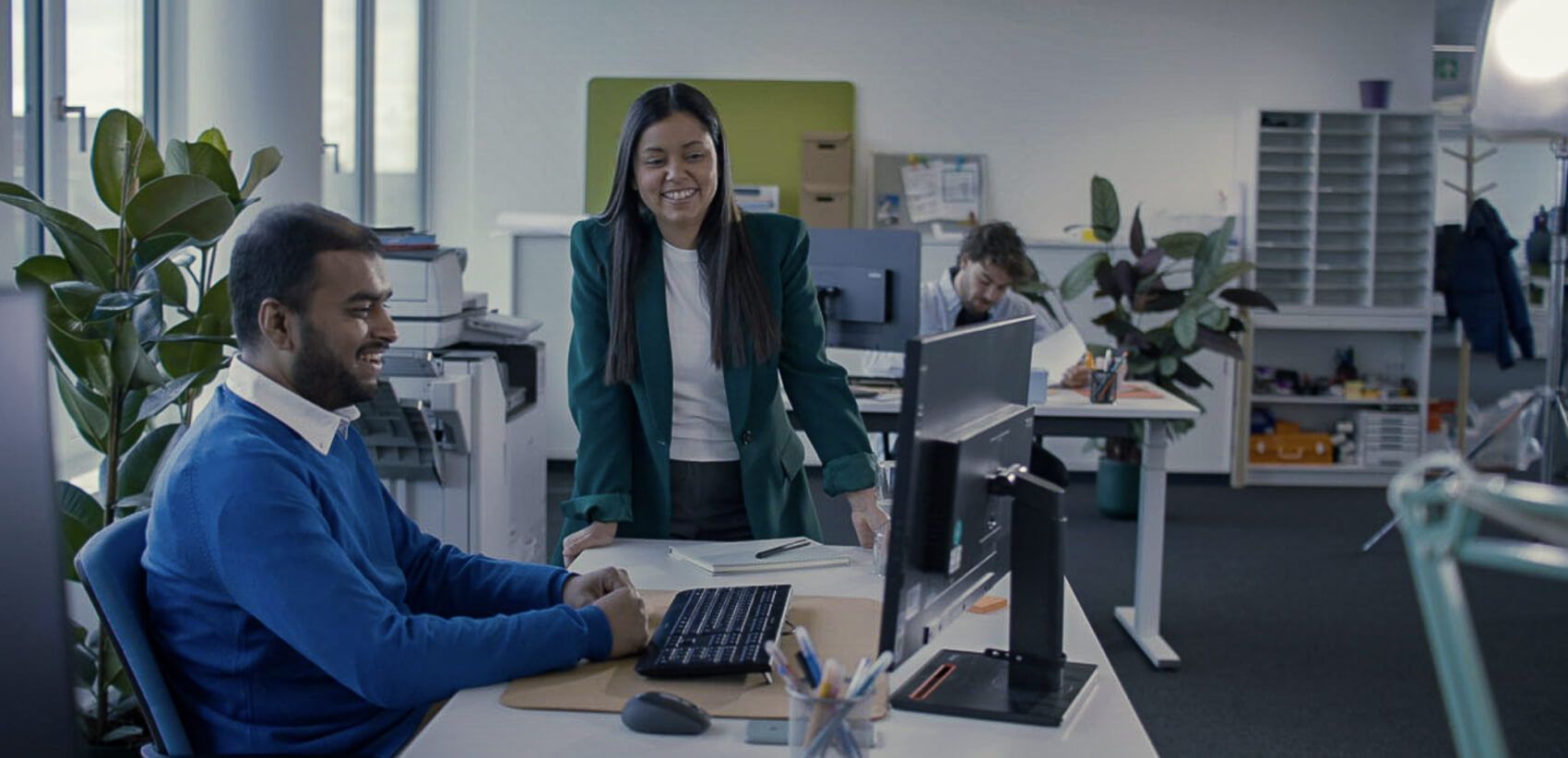
So, how does Elli’s workflow with Lokalise look in practice? It’s all about collaboration: product, designers, developers, and translators can all work together at the start of each sprint. The team aims for weekly releases with Friday as the translation ‘drop-off date’.
Here’s how it works:
- The designers create the design in Figma.
- They push the designs (along with the base language) to Lokalise.
- The translators work on Lokalise throughout the entire sprint.
- Developers continue developing the application while the translations are worked on in parallel.
- Once the translations are done, they pull them into Azure Repos (code repository).
With the new workflow, teams are able to collaborate with context and overall coherence. Translators have context for the entire UI so they can better understand the flow and what is being built.
Plus, they can communicate with translators directly in Lokalise using the built-in chat or Slack. Each project is hooked up to its own Slack channel so teams are notified when translators have a question. They simply go to Lokalise, see what they’re asking about, and respond as quickly as possible.
Collaboration between Elli and the translators has led to higher velocity and a better user experience in all languages. Without losing scalability.
Recently, Ganesh noticed that there’s still usually a wait time for translations. “It's not four weeks, but it's still two or three days and there could also be feedback to incorporate,” he says. So for the app, they recently adopted Lokalise’s SDK.
“Now we don’t have to wait for the final version of the translations. We can submit the applications for review without being blocked by translators. Even if we release and find something that's broken, we can make the necessary changes and ship updates with the over-the-air SDK.”
Now we don’t have to wait for the final version of the translations. We can submit the applications for review without being blocked by translators. Even if we release and find something that's broken, we can make the necessary changes and ship updates with the over-the-air SDK.
Results
Elli can now deploy new features in 23 languages simultaneously every week. They now have a single source of truth to manage multilingual translations. Throughout the ongoing expansion across Elli, Lokalise has delivered deeply consultative and strategic guidance and support.
In addition, Lokalise drives tangible business benefits while helping Elli create a better customer experience across a range of touch points, from their website to their app, and beyond.
Lokalise has helped Elli:
- Increase speed to market from a month to a week
- Decrease headcount for coordinating translations from 3 people to just 1 person per team
Localization made easy.
Try it free or let us show you how it works
Read more case studies

How Lokalise contributed to Revolut's massive growth


ESL Gaming shortens time to market with a centralized approach to translation
Case studies

Behind the scenes of localization with one of Europe’s leading digital health providers
Read more Case studiesSupport

Company
Follow



Localization workflow for your web and mobile apps, games and digital content.
©2017-2026
All Rights Reserved.