Lokalise APIv2 in practice
In one of my previous articles I was covering Lokalise APIv2 basics, explaining its key features, and how to get started with it. Today we are going to work a bit more with the API using Node, Ruby, and Python SDKs. We are going to cover some real-world scenarios and discuss different code samples. By the end of this article you’ll be able to put your knowledge to work in real projects.
Updated on September 20, 2024·Ilya Krukowski How to give AI translation tools more context
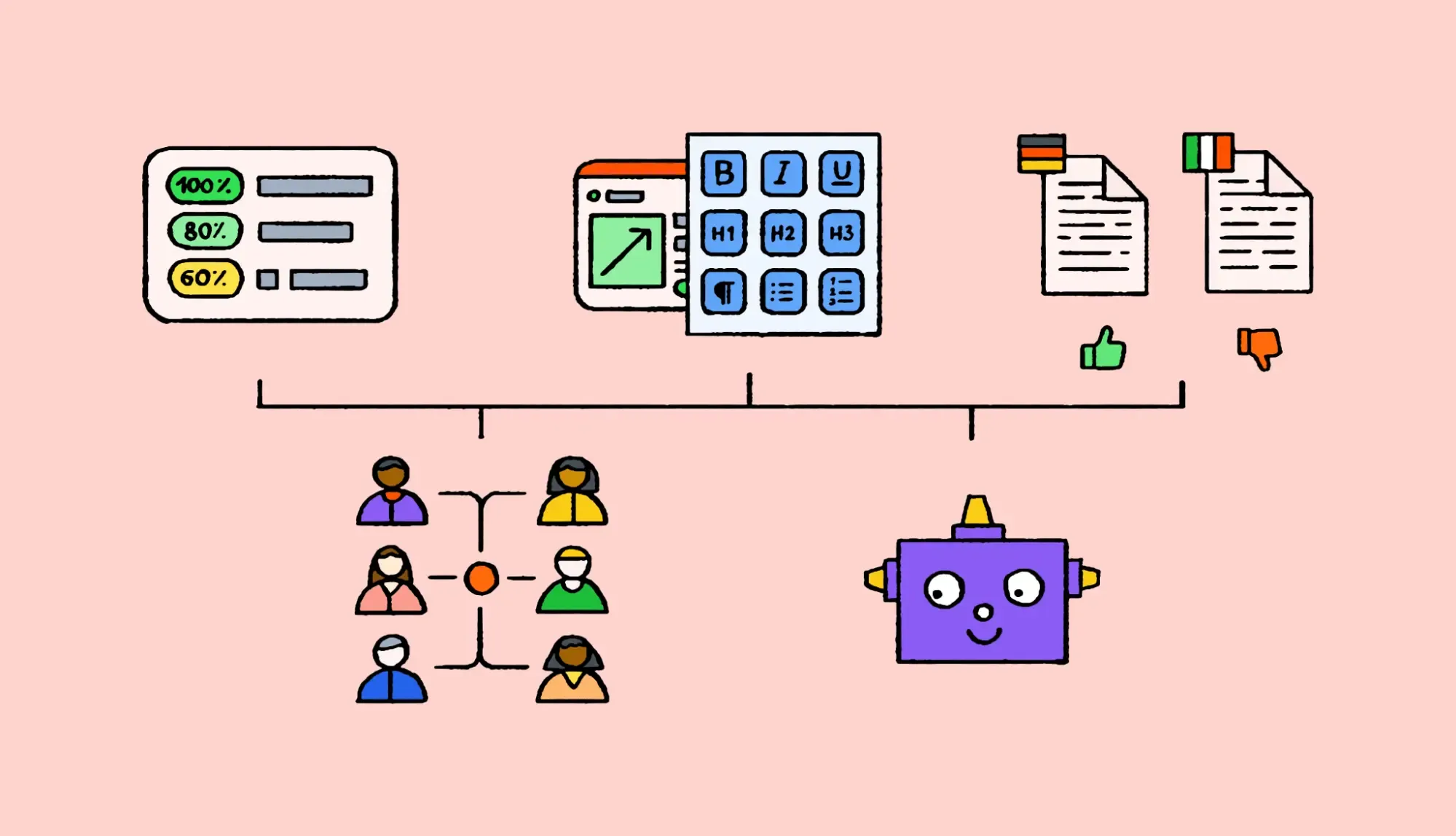
Why is it so hard to get translations that tick all these boxes? Sensitive to cultural normsIndustry-specificOn-brandAccurate If you’ve translated product copy, marketing content, or anything else in the past, you’ll know that it’s hard to get translations right—at least the first time around. This is where many begin asking: what is AI transl
Updated on December 5, 2023·Rachel Wolff New in November: break language barriers. Build efficiencies. Here’s how.
Sometimes even the smallest changes can make a big difference. They serve as a reminder that breaking down barriers and building efficiencies don't always require big transformations. So, without further ado, let’s dive into this month’s updates and learn how you can use these new tools and tricks to change your localization process in a big way. Product updates Translate 4x more content with AI
Updated on November 23, 2023·Rachel Wolff How to create a style guide for human and AI translators
When companies expand into new territories, style guides are one of the many tools that can make sure translated content is consistent, on-brand, and sensitive to local cultures and norms. It's used to define the tone, the formality, the grammar, and other stylistic preferences when targeting different audiences. Understanding what is AI translation can also play a key role in ensuring th
Updated on July 18, 2024·Rachel Wolff The 9 biggest localization issues/problems developers face and how to solve them
Implementing a proper localization workflow can be quite the complex task, especially when you have never done it before. There are numerous things for you to consider and keep in mind. In this article, we will discuss some of the most common localization issues/problems that we, as developers, face and how to solve them with the help of the Lokalise TMS (translation management system). The concepts presented in this articl
Updated on September 23, 2024·Ilya Krukowski Laravel localization: A step-by-step guide with examples
In this tutorial, you’ll learn how to perform Laravel localization and present your application in multiple languages. We’ll cover working with translation files, performing pluralization, creating a language switcher, and more using Laravel localization, localized time, and multi-language examples.
Updated on February 12, 2024·Ilya Krukowski Lokalise API: What is it and how to use it?
In this article you will learn what is an API and how to use Lokalise API to define custom workflows and create automation scripts with ease. First we will cover some theory and then proceed to practice and discuss typical examples. To follow this article you don’t need to be a professional developer but having at least a basic programming knowledge is very much recommended. All examples and processes will consider
Updated on September 20, 2024·Ilya Krukowski Date and time localization
Date and time localization is crucial when you're building apps or software that people all over the world will use. Different countries have their own ways of showing dates and times, and if your app doesn’t handle these differences, it can get confusing for users. In this article, we’ll explore why date and time localization matters, some of the tricky parts involved, and how you can make it easier across various programming languages and frameworks. We’ll dive into
Updated on September 13, 2024·Ilya Krukowski